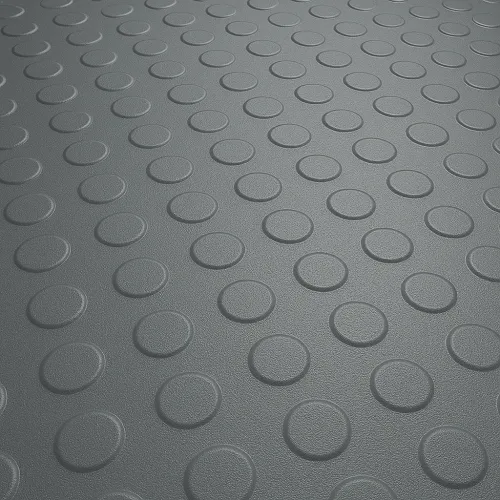
PVC industrial flooring is a durable surfacing material made from polyvinyl chloride (PVC) combined with plasticizers, stabilizers, fillers, anti-static agents, and flame-retardant additives. It is produced through coating, calendering, or extrusion processes and comes in rolls or tiles. PVC flooring can be formulated for various functional needs—including heavy-duty wear resistance, chemical resistance, anti-static performance, slip resistance, and antibacterial properties—making it widely suitable for industrial and commercial environments.
Product Functions and Primary Uses
Core Functions
- Provides a wear-resistant, impact-resistant walking and working surface.
- Withstands oils, chemicals, rolling loads, abrasion, and repeated mechanical stress.
- Offers anti-static or conductive performance for electronics protection.
- Supports hygiene management through antibacterial or anti-mold options.
- Enhances comfort and sound absorption compared to concrete or ceramic tiles.
Typical Applications
- Production workshops, assembly lines, manufacturing facilities
- Electronics and semiconductor plants (ESD/anti-static systems)
- Warehouses, logistics centers, forklift traffic areas
- Hospitals, laboratories, pharmaceutical facilities
- Food processing plants and cold-chain facilities
- Commercial spaces, supermarkets, educational institutions
- Car repair shops, metalworking zones, and chemical-handling areas
Product Features
- High Wear Resistance: Engineered with a reinforced wear layer to resist scratching and abrasion from foot traffic, machinery, and forklifts.
- Slip Resistance: Optional textured or granular surfaces reduce the risk of slips and falls.
- Anti-static/Conductive Functionality (optional): Essential for electronics manufacturing, preventing damage to sensitive components.
- Chemical & Oil Resistance: Special formulations resist oils, lubricants, and common acids/alkalis.
- Easy Cleaning & Low Maintenance: Smooth surfaces and protective coatings simplify sanitation and reduce maintenance costs.
- Customizable Appearance: Available in various colors, patterns, and dimensions to match industrial or commercial aesthetics.
- Comfort & Noise Reduction: Softer underfoot compared to concrete, reducing worker fatigue and improving acoustic performance.
- Cost-Effective: Lower installation and maintenance cost than many high-performance flooring solutions; easy to repair or replace in sections.
Product Specifications (Typical Ranges)
Values vary by manufacturer; always refer to the technical data sheet (TDS).
| Specification | Typical Value / Description |
| Form | Roll (sheet) or tile |
| Roll width | 2.0 m–2.05 m (other widths available) |
| Tile sizes | 300×300 mm, 500×500 mm, 609×609 mm |
| Thickness | 2–5 mm (standard) / 6–10 mm (heavy-duty) |
| Wear layer thickness | 0.15–0.7 mm |
| Surface texture | Smooth, matte, embossed, slip-resistant |
| Electrical properties | Anti-static or conductive optional |
| Antibacterial finish | Optional |
| Roll length | 10–20 m per roll |
| Density | ~1.2–2.0 g/cm³ |
| Operating temperature | -10°C to +50°C (varies by formulation) |
| Fire resistance | Flame-retardant additives available |
Instructions for Use (Installation Guidelines)
Surface Preparation
- Ensure the subfloor is level, dry, dust-free, and free from oil or cracks.
- Repair uneven areas with cement screed or self-leveling compound.
- Acclimate flooring rolls/tiles to room temperature for 24 hours before installation.
Installation Methods
- Full Adhesive Installation: Apply PVC-compatible adhesive to secure rolls or tiles permanently.
- Heat-Welded Seams: For hygiene-critical or waterproof zones, weld seams using PVC welding rods.
- Loose-Lay/Floating Installation: Suitable for heavy-thickness tiles or temporary setups (often used in warehouses).
Important Notes
- Avoid installation in extreme temperature or high humidity conditions.
- Ensure adhesives and welding rods match the flooring specifications.
- Anti-static flooring must be connected to a grounding system by qualified personnel.
- Allow adhesives to fully cure before heavy use or cleaning.
Daily Use and Maintenance
Routine Cleaning
- Sweep or vacuum regularly to remove dirt and grit.
- Mop with neutral detergents; avoid prolonged exposure to strong acids or alkalis.
- Remove oil stains using appropriate degreasing agents.
Periodic Maintenance
- Apply polyurethane or acrylic sealers to enhance wear resistance (as recommended).
- Inspect seams and edges regularly; repair damaged areas promptly.
- For anti-static flooring, regularly test surface resistance and grounding performance.
Repair
- Replace individual damaged tiles or patch affected roll areas.
- Use compatible adhesives and welding materials for repairs.
Applicable Industries & Target Customers
Industries
- Electronics & semiconductor manufacturing
- Pharmaceutical and healthcare facilities
- Food processing and cleanroom environments
- Automotive and metal fabrication industries
- Logistics and warehousing
- Education, retail, and public buildings
- Laboratories and R&D facilities
Target Customers
- Industrial plant facility managers
- Construction contractors and flooring installers
- Property management teams, hospitals, and schools
- Electronics manufacturing service (EMS) providers
- Procurement managers and safety/ESD supervisors
Recommendations for Selecting the Right PVC Industrial Flooring
- Define application requirements: load capacity, chemical exposure, ESD needs, hygiene requirements, temperature, etc.
- Review technical documents: including wear layer thickness, abrasion resistance, chemical resistance, fire performance, VOC emissions, and electrical properties.
- Choose appropriate seam treatment: welded seams for cleanrooms; tiles for repairable areas.
- Check industry compliance: especially for food-grade, medical, or electronic environments.
- Evaluate long-term costs: include installation, cleaning, service life, and replacement costs.
- Prioritize after-sales support: installation guidance, ESD testing, maintenance recommendations.
- Request samples: evaluate color stability, surface texture, comfort, and durability under real conditions.
Frequently Asked Questions (FAQ)
Q: Is PVC industrial flooring better than epoxy flooring?
- A: Each has advantages. PVC offers comfort, ESD performance, and easy maintenance; epoxy provides seamless, highly chemical-resistant surfaces ideal for heavy loads. Selection depends on the environment.
Q: Does anti-static flooring require grounding?
- Yes. Anti-static or conductive flooring must be connected to a grounding network to fully dissipate static electricity.
Q: Can PVC flooring be used outdoors?
- Standard PVC flooring is not recommended for outdoor use due to UV and temperature sensitivity. Use outdoor-specific materials if required.
Q: How long does PVC flooring last?
- Typically 5–10 years for light traffic and 3–7 years for heavy industrial use, depending on thickness and maintenance.
PVC industrial flooring is a versatile, functional, and cost-effective solution for a wide range of industrial and commercial environments. By understanding your operational needs—load, chemicals, ESD requirements, hygiene standards, maintenance expectations—you can choose the right flooring system to ensure long-lasting, safe, and efficient performance.