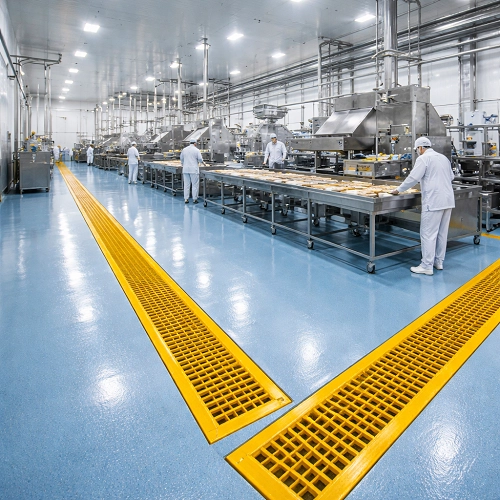
In modern food manufacturing, flooring is far more than a surface underfoot—it is a critical component of food safety, operational efficiency, and regulatory compliance. At our company, we design and manufacture high-performance food factory flooring systems that meet the demanding conditions of food processing environments while supporting safe, efficient, and hygienic production.
From wet processing zones to dry packaging areas, our flooring solutions are engineered to withstand heavy loads, aggressive cleaning, temperature fluctuations, and strict hygiene standards—without compromising durability or safety.
Product Functions and Uses
Food factory flooring must perform reliably in some of the most challenging industrial environments.
Our flooring systems are designed to deliver the following core functions:
1. Hygiene and Contamination Control
- Seamless, non-porous surfaces prevent bacterial growth
- Resistant to mold, mildew, and food residue absorption
- Easy-to-clean structure supports HACCP and GMP requirements
2. Safety and Slip Resistance
- Textured or anti-slip finishes reduce accident risk in wet or oily areas
- Stable under frequent washdowns and chemical exposure
- Enhances worker confidence and productivity
3. Structural Protection
- Protects concrete substrates from corrosion, cracking, and chemical attack
- Absorbs impact from dropped tools, carts, and heavy equipment
- Extends the service life of the facility floor
4. Operational Efficiency
- Designed for fast installation and minimal downtime
- Smooth traffic flow for forklifts, pallet jacks, and automated systems
- Supports zoning and workflow organization through color coding
Product Features
Our food factory flooring systems incorporate advanced material technology and proven engineering:
- Seamless Construction – Eliminates joints where bacteria and dirt can accumulate
- Chemical Resistance – Withstands acids, alkalis, fats, sugars, and cleaning agents
- Thermal Shock Resistance – Performs under hot water washdowns and freezer conditions
- High Mechanical Strength – Resists abrasion, impact, and heavy rolling loads
- Customizable Surface Textures – From smooth to aggressive anti-slip finishes
- Color Options – Supports visual zoning, safety marking, and brand alignment
- Low VOC Formulations – Environmentally responsible and worker-safe
Specifications and Technical Parameters
Typical specifications for our food-grade flooring systems include:
Material Types:
- Polyurethane cement flooring
- Epoxy resin flooring
- Hybrid epoxy-polyurethane systems
Thickness Range:
- 3 mm – 9 mm (customizable based on load and environment)
Compressive Strength:
- ≥ 50 MPa
Slip Resistance:
- R10–R13 (DIN 51130), depending on surface texture
Operating Temperature Range:
- -40°C to +120°C (varies by system)
Chemical Resistance:
- Resistant to lactic acid, citric acid, oils, fats, sugars, detergents, and disinfectants
Curing Time:
- Light foot traffic: 8–12 hours
- Full service: 24–72 hours
Usage Instructions and Installation Guidelines
- Proper installation is critical to long-term performance.
Our recommended process includes:
Substrate Preparation
- Concrete must be sound, clean, and free of oil or contaminants
- Mechanical grinding or shot blasting is required
- Moisture levels tested prior to application
Priming
- Application of a compatible primer to enhance adhesion
- Moisture-tolerant primers available for challenging substrates
System Application
- Flooring applied in layers according to design thickness
- Anti-slip aggregates broadcast where required
- Seamless coving formed at wall-floor junctions for hygiene
Curing and Commissioning
- Controlled curing to ensure full mechanical strength
- Area reopened according to project schedule
Applicable Industries
Our food factory flooring solutions are widely used across the food and beverage sector, including:
- Meat and poultry processing plants
- Dairy and cheese production facilities
- Beverage and brewery operations
- Bakery and confectionery factories
- Seafood processing plants
- Ready-meal and frozen food facilities
- Commercial kitchens and central kitchens
Target Customer Groups
Our flooring systems are ideal for:
- Food and beverage manufacturers
- Factory owners and operators
- Engineering and design consultants
- EPC contractors and installers
- Facility managers and maintenance teams
- Cold storage and logistics operators
Practical Tips and Everyday Use Techniques
To maximize the performance and lifespan of your food factory flooring, we recommend the following best practices:
Daily Maintenance Tips
- Clean spills promptly to prevent residue buildup
- Use approved, non-abrasive cleaning agents
- Avoid metal scrapers or sharp tools on the surface
Cleaning Techniques
- Hot water washdowns are safe when flooring is properly cured
- Use foam or low-pressure cleaning in slip-resistant areas
- Rinse thoroughly to prevent chemical film formation
Operational Best Practices
- Use rubber wheels on carts and trolleys where possible
- Place mats at high-impact or transition zones
- Schedule periodic inspections to address minor damage early
Long-Term Care
- Reapply surface sealers in high-wear areas as needed
- Repair localized damage immediately to maintain hygiene integrity
- Keep drainage systems clear to avoid standing water
Food factory flooring plays a vital role in ensuring hygiene, safety, and operational continuity. At our company, we deliver flooring solutions that are purpose-built for the realities of food manufacturing—combining durability, compliance, and ease of maintenance in one integrated system.