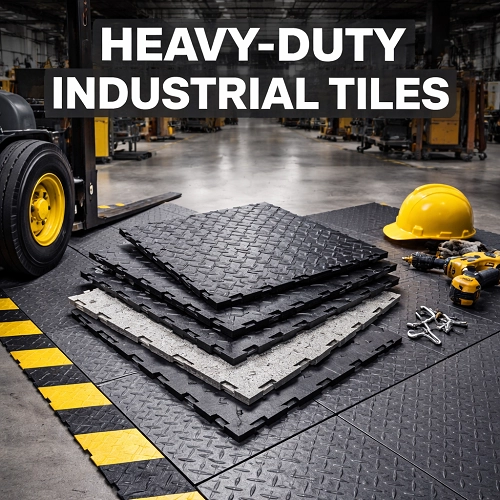
In industrial and commercial environments, flooring is more than just a surface—it is a critical component that affects safety, productivity, and longevity. Heavy-duty industrial tiles are increasingly favored for warehouses, factories, automotive shops, and high-traffic commercial spaces due to their strength, durability, and versatility.
What Are Heavy-Duty Industrial Tiles?
Heavy-duty industrial tiles are flooring solutions designed to withstand extreme mechanical, chemical, and thermal stresses. Unlike residential tiles, they are engineered for industrial applications where high loads, frequent foot and vehicle traffic, and harsh environmental conditions are common. These tiles can be manufactured from materials such as:
- Porcelain and Ceramic: High-density porcelain tiles are resistant to wear and abrasion, making them suitable for heavy foot traffic and moderate industrial use. They can be glazed or unglazed depending on slip resistance requirements.
- Vinyl Composition Tiles (VCT) and Luxury Vinyl Tiles (LVT): These offer resilience and chemical resistance and can be reinforced for industrial environments.
- Epoxy-Coated or Polymer Tiles: Highly chemical-resistant and often modular, these tiles can withstand impacts, oil spills, and corrosive substances.
- Concrete and Terrazzo Tiles: Extremely durable, suitable for warehouses and facilities handling heavy machinery.
Key Performance Characteristics
Heavy-duty industrial tiles must meet specific performance criteria to ensure long-term functionality:
- Load-Bearing Capacity: Industrial tiles must withstand both static loads (heavy equipment, storage racks) and dynamic loads (forklifts, pallet jacks). Compressive strength ratings often exceed 35 MPa (megapascals) for concrete or porcelain tiles.
- Abrasion Resistance: Tiles are subjected to continuous foot traffic and wheeled equipment. The PEI (Porcelain Enamel Institute) rating system or ASTM C1027 standards help determine abrasion resistance for industrial use.
- Slip Resistance: Safety is crucial in industrial spaces. Tiles are often rated using the COF (Coefficient of Friction) or R-value for slip resistance. Textured surfaces or anti-slip coatings enhance worker safety.
- Chemical and Stain Resistance: In facilities exposed to oils, solvents, acids, or alkalis, tiles must resist corrosion and staining. Epoxy and polymer-based tiles are particularly effective here.
- Thermal and Fire Resistance: Industrial operations may generate heat. Tiles must tolerate thermal shocks, extreme temperatures, and sometimes direct exposure to sparks or flames.
Installation Considerations
Proper installation is critical for heavy-duty tiles. Technical considerations include:
- Subfloor Preparation: The substrate must be level, structurally sound, and free of moisture. Concrete floors may require moisture barriers to prevent efflorescence or adhesive failure.
- Adhesives and Grouting: Industrial-grade adhesives must match the load requirements, chemical exposure, and temperature conditions. Epoxy grout is often preferred in high-stress environments due to its durability and chemical resistance.
- Tile Layout and Expansion Joints: Precise layout is essential to prevent cracking or movement. Expansion joints may be required for large floor areas to accommodate thermal expansion or heavy machinery vibration.
- Curing and Maintenance Post-Installation: Proper curing of adhesives and coatings ensures long-term performance. Some polymer or epoxy tiles require heat curing to achieve maximum hardness and chemical resistance.
Maintenance and Longevity
Heavy-duty industrial tiles are designed for longevity, but proper maintenance extends their lifespan:
- Routine Cleaning: Sweep or vacuum debris to prevent abrasion. Use industrial detergents compatible with the tile material.
- Periodic Inspection: Check for cracked or chipped tiles, especially in high-impact areas.
- Sealing and Recoating: Some tiles, like natural stone or unglazed porcelain, benefit from periodic sealing to maintain chemical resistance and prevent staining.
- Repair Strategies: Modular tiles allow for easy replacement without extensive downtime.
Advanced Innovations in Industrial Tiles
Recent advances have improved both the functionality and sustainability of heavy-duty industrial tiles:
- Antimicrobial Surfaces: Tiles with built-in antimicrobial agents reduce bacterial and fungal growth in food processing and healthcare industrial facilities.
- Recycled and Eco-Friendly Materials: Some manufacturers produce tiles from recycled glass, ceramic, or polymer composites, reducing environmental impact.
- Smart Flooring: Integrated sensors in industrial tiles monitor load distribution, temperature, or chemical exposure, offering predictive maintenance capabilities.
Choosing the Right Heavy-Duty Industrial Tile
Selecting the appropriate tile requires assessing:
- Load requirements and traffic type
- Chemical and thermal exposure
- Safety standards for slip and fall prevention
- Maintenance capabilities and desired lifespan
- Environmental and sustainability considerations
Consulting with flooring engineers and manufacturers ensures the tiles meet both current operational needs and future scalability.
Heavy-duty industrial tiles are not just functional—they are a strategic investment in safety, efficiency, and durability. With careful selection, precise installation, and proper maintenance, these tiles provide decades of reliable service in some of the most demanding industrial environments. By understanding the technical aspects and performance criteria, facility managers and engineers can choose solutions that optimize operations while minimizing downtime and repair costs.